

Perfect Baked Salmon
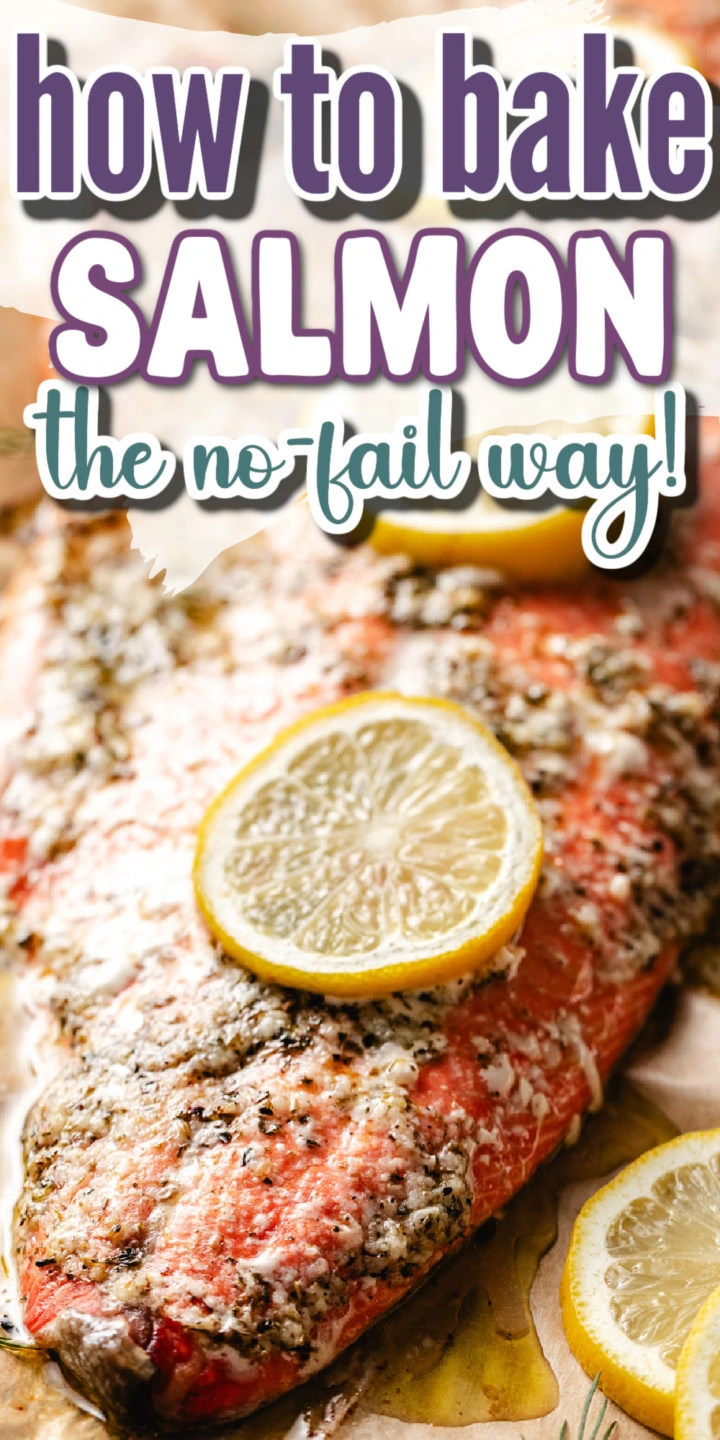
Use the best baked salmon internal temp and simple oven timing tips for tender, flaky fish every time.
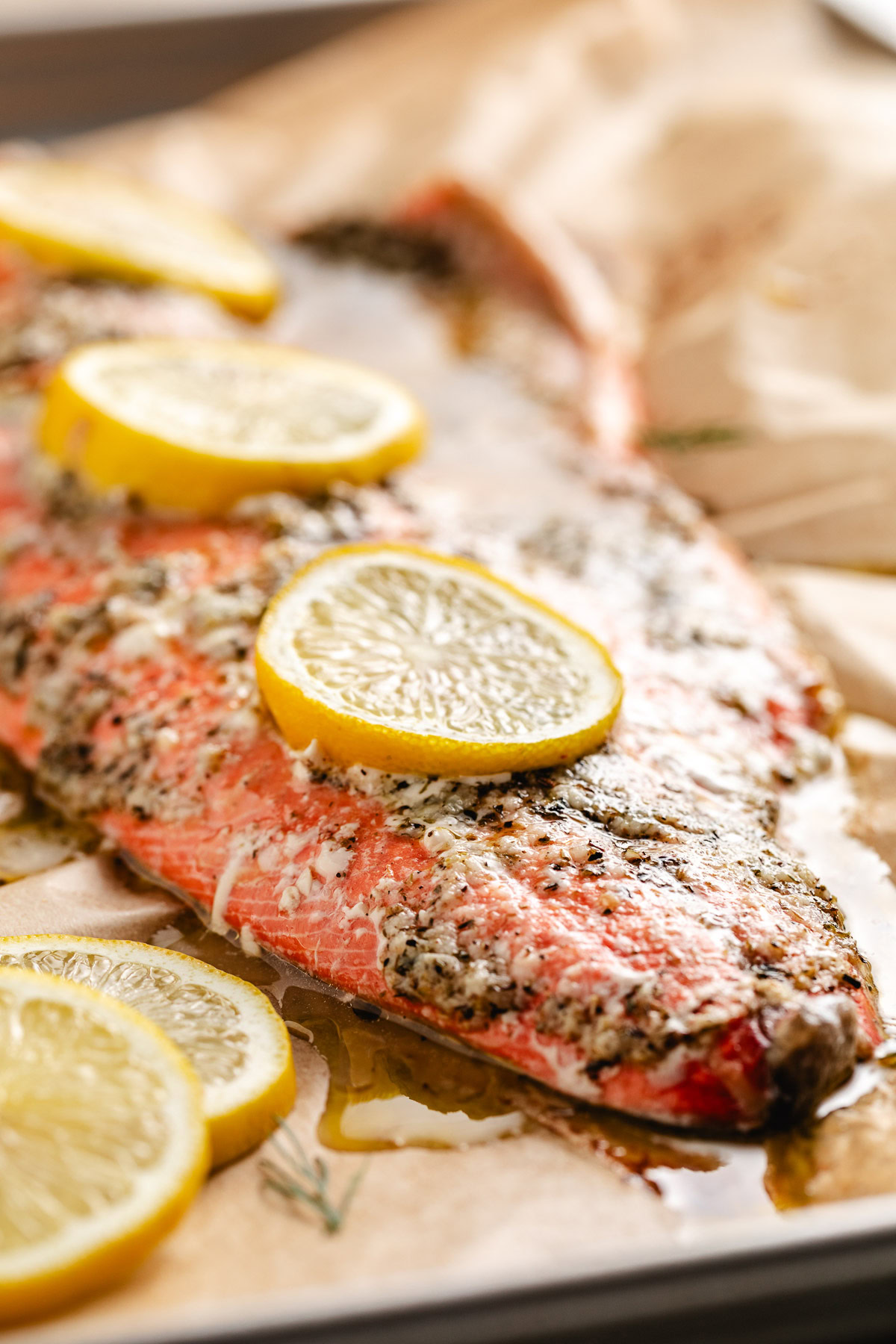
If you’ve ever ended up with dry salmon, the problem is usually temperature, not the fish itself. I use a thermometer and pull the salmon from the oven at 130°F, so it can rest to about 135°F for tender, flaky results.
In this post, I explain the best baked salmon internal temp, simple oven time guidelines based on thickness, and a few easy tips that help keep the fish moist.
Best Baked Salmon Internal Temp
For tender, flaky baked salmon, I aim for a final temperature of 135°F. Since the fish keeps cooking a little after it comes out of the oven, I usually remove it when the thickest part reaches 130°F.
That short rest helps the salmon finish cooking without drying out. It also gives you a little more control over the texture, especially with thicker fillets or a whole side of salmon.
Pull temp: 130°F
Final temp after resting: about 135°F
For well done fish: 145°F
If you prefer salmon more well done, you can leave it in the oven a little longer. I like taking it out earlier so it stays moist and flaky instead of firm and dry.
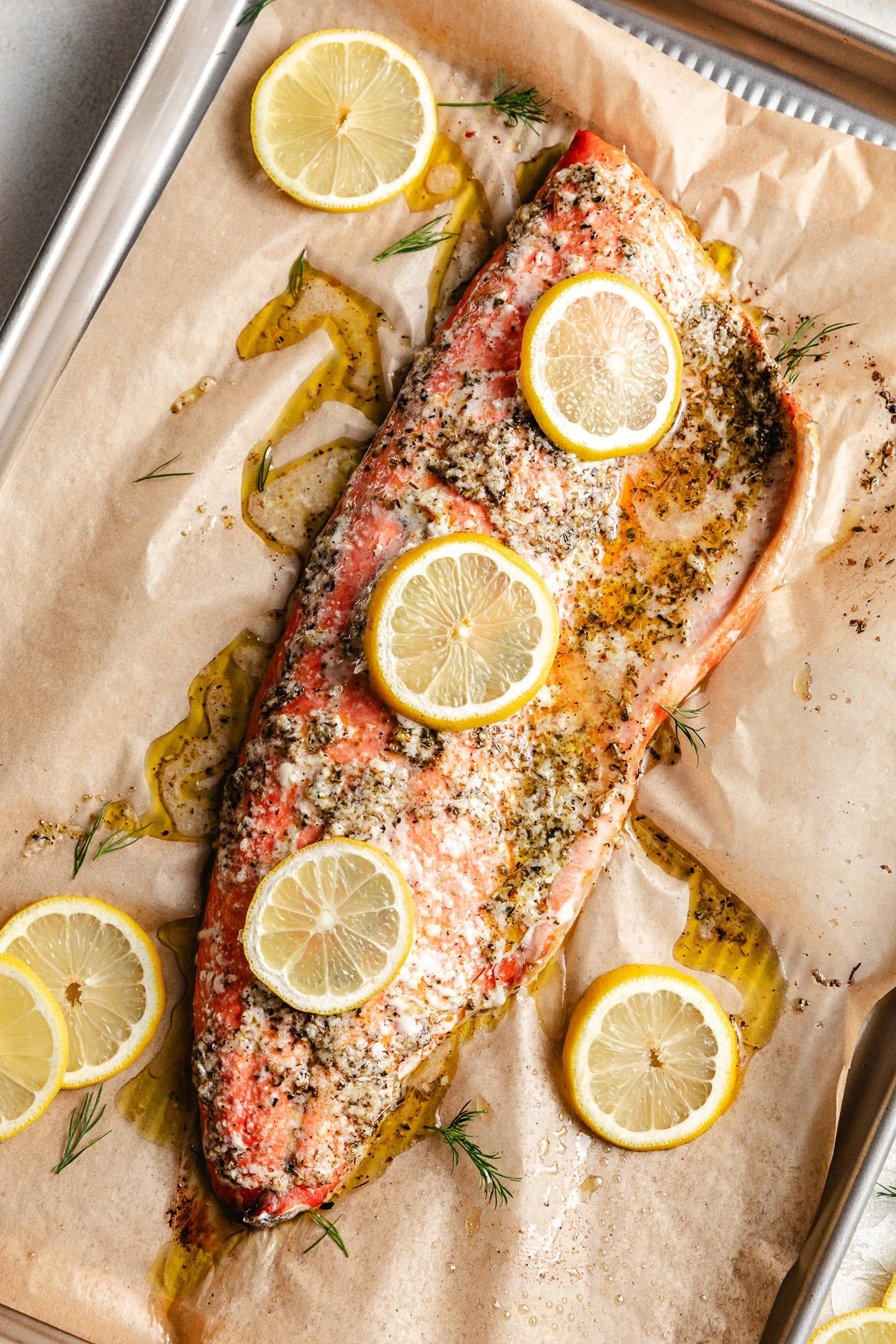
How to Keep Baked Salmon Moist
The easiest way to keep salmon from drying out is to stop relying on looks alone. By the time salmon looks completely done in the oven, it usually keeps cooking long enough to turn dry by the time it reaches the plate.
I check the thickest part with a digital thermometer and pull the fish at 130°F. That short rest helps it finish cooking gently and stay much more tender.
How to Tell When Salmon Is Done
- Use a thermometer: Check the thickest part of the fillet or whole side of salmon.
- Look for gentle flaking: The salmon should separate easily with a fork without looking dry.
- Watch the center: It should still look moist, not chalky or dry.
- Rest before serving: A 5-minute rest helps the fish finish cooking and hold onto its juices.
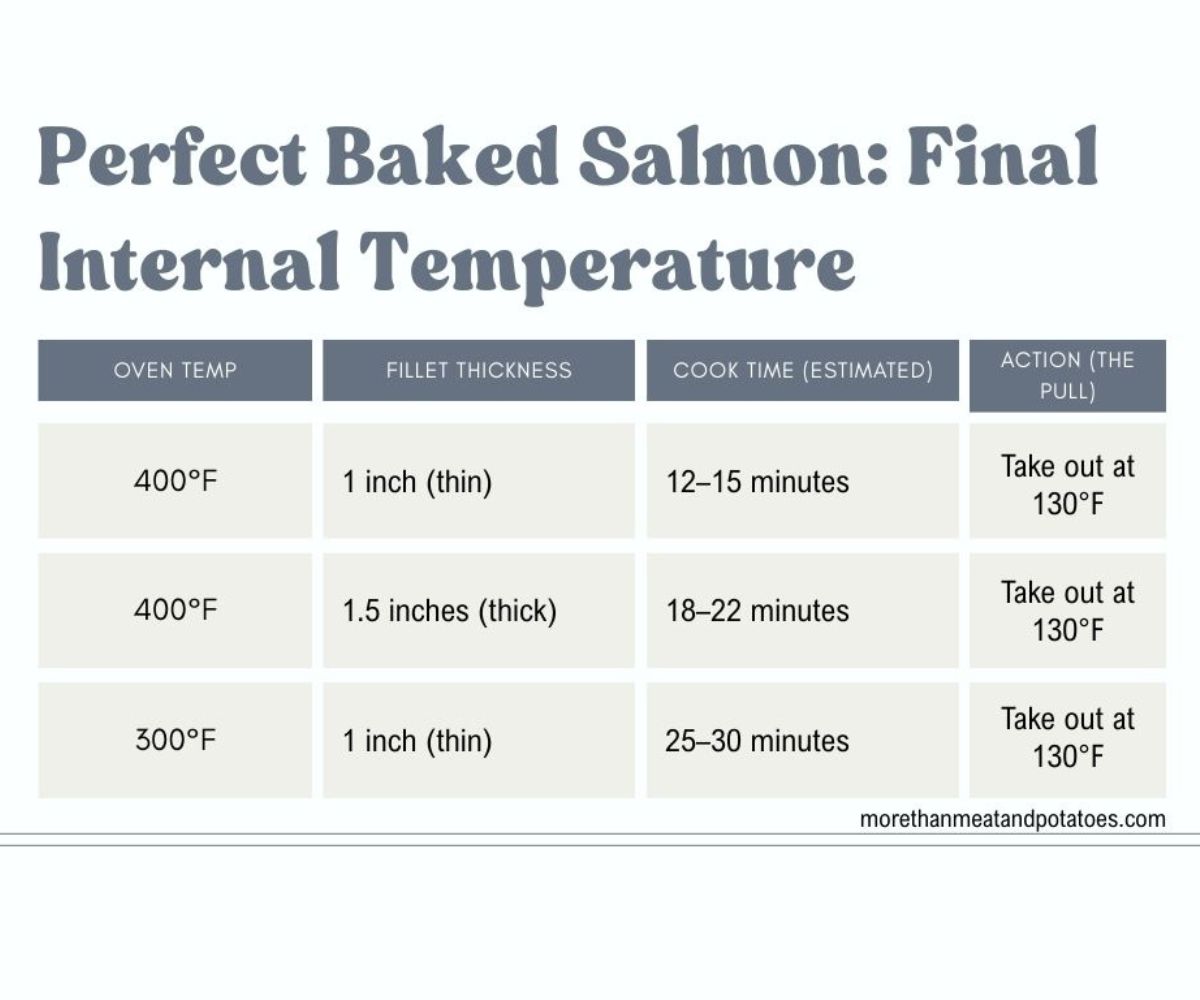
My Time and Temperature Chart
I use this chart as a quick reference. Since every oven is a little different, I always start checking the thickest part a few minutes early.
Why White Stuff Comes Out of Salmon
The white substance that sometimes appears on salmon is called albumin. It’s a protein that rises to the surface when the fish cooks and the muscle fibers tighten.
A little albumin is normal, but a lot of it usually means the salmon cooked a little too hot or too long. Pulling the fish earlier and letting it rest helps reduce it.
Optional Salt Brine for Better Texture
If you want to reduce albumin and help the salmon stay a little juicier, you can give it a quick salt brine before baking. I use 1 tablespoon of salt per 1 cup of cold water and soak the salmon for about 10 minutes.
After brining, pat the fish dry very well before adding the oil and seasonings. This step is optional, but it can help improve texture and appearance, especially with thicker fillets or a whole side of salmon.
How to Bake a Whole Salmon Fillet
Here’s a quick look at the process. The full recipe with exact ingredient amounts and instructions is in the recipe card below.
How to Choose a Roasting Temp
Depending on your schedule and the texture you want, choose one of these two baking temperatures:
- 400°F: This is my usual choice for a faster weeknight dinner. It cooks the salmon fairly quickly and gives the edges a little more color.
- 300°F: This lower temperature takes longer, but it gives the fish a softer, more even texture from edge to center.
If you’re looking to expand fish on the menu, I recommend trying my flavorful maple dijon salmon recipe for a sweet and tangy glaze.
To round out the meal, I usually serve this fillet with a side of sautéed green beans with garlic or over a bed of fluffy coconut jasmine rice to soak up all those lemon-herb juices.
What You’ll Need
For The Salt Brine:
- 4 cups cold water
- 4 tablespoons salt, table salt
For The Salmon and Seasoning
- 2 to 3 pound whole salmon fillet, skin-on
- 2 tablespoons olive oil
- 3 garlic cloves, minced
- 1 ½ teaspoons Italian seasoning
- ¼ teaspoon salt
- ¼ teaspoon black pepper
- 1 large lemon, half juiced, half sliced into rounds
- 1 tablespoon fresh parsley or dill, optional garnish
How to Make It
- In a large bowl or a rimmed baking sheet, stir the 4 cups of water and 4 tablespoons of salt until the salt is mostly dissolved. Submerge the salmon fillet in the water for 10 minutes. This prevents the “white stuff” (albumin) from leaking out during baking.4 cups cold water4 tablespoons salt2 to 3 pound whole salmon fillet
- While the fish soaks, preheat the oven to 400°F, and line a large baking sheet with parchment paper.
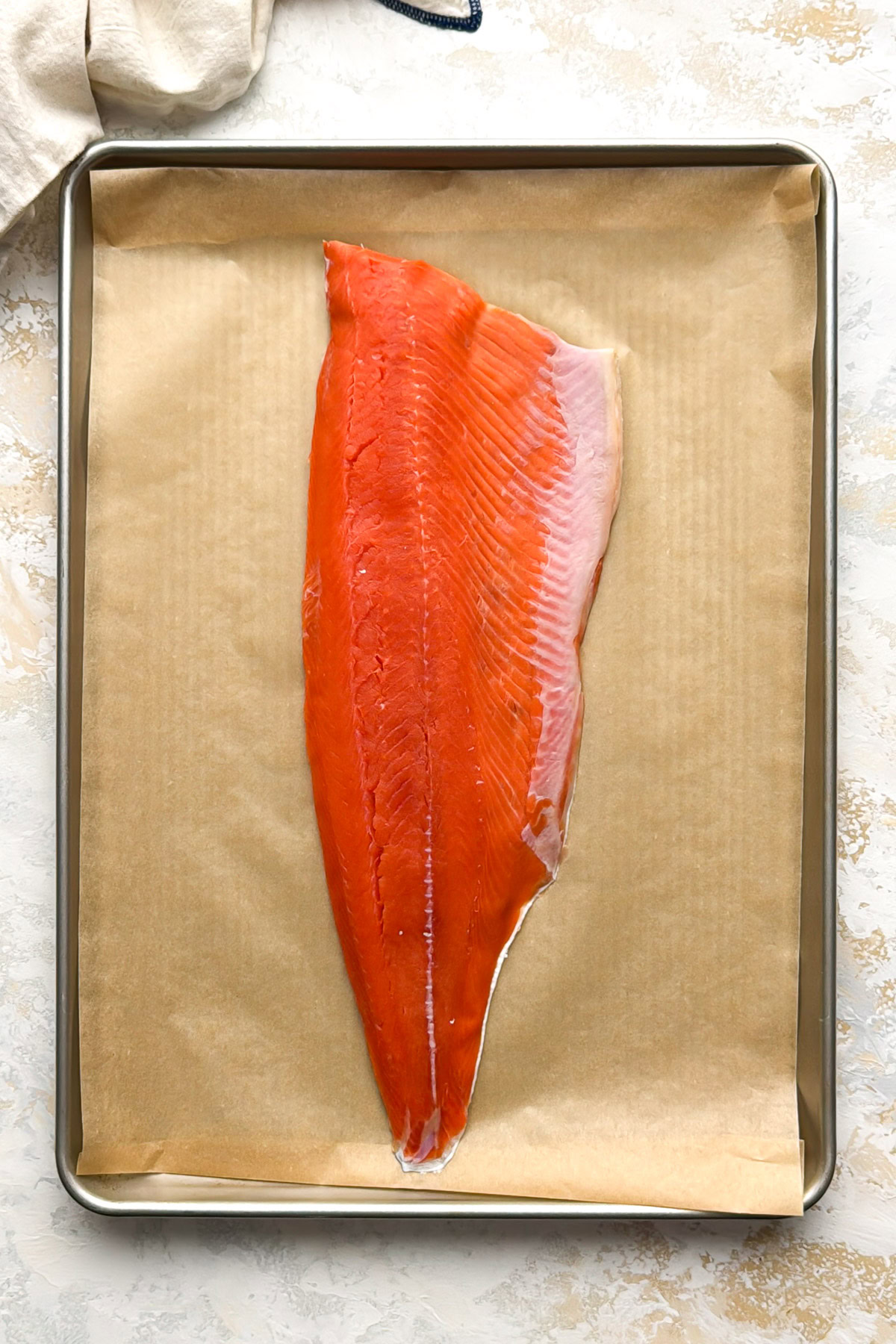
- Remove the salmon from the brine. Use paper towels to pat the fillet completely dry on both sides. Place the fish skin-side down on the prepared pan.
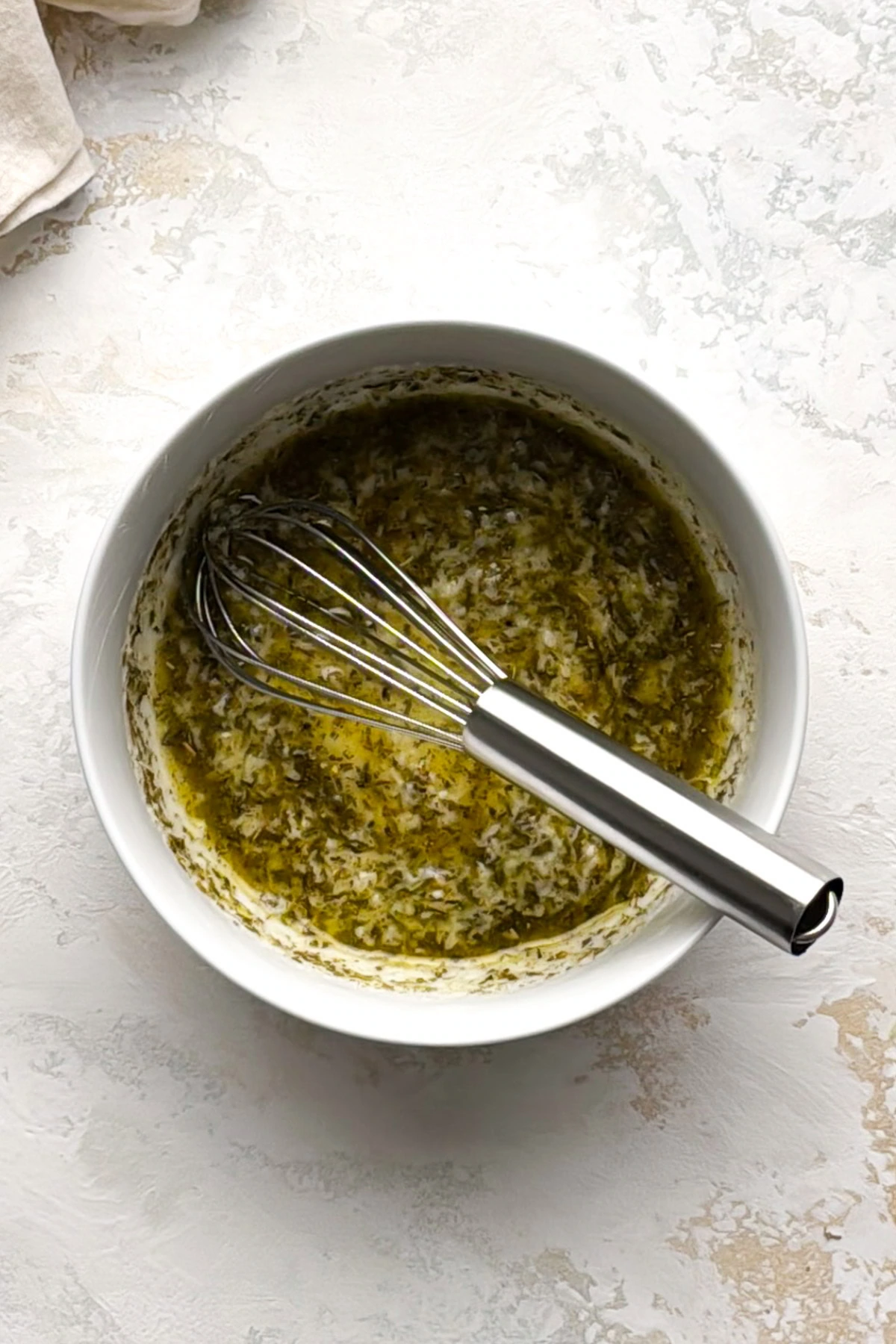
- In a small bowl, whisk together the olive oil, minced garlic, Italian seasoning, salt, pepper, and the juice from half of the lemon.2 tablespoons olive oil3 garlic cloves1 ½ teaspoons Italian seasoning¼ teaspoon salt¼ teaspoon black pepper½ large lemon
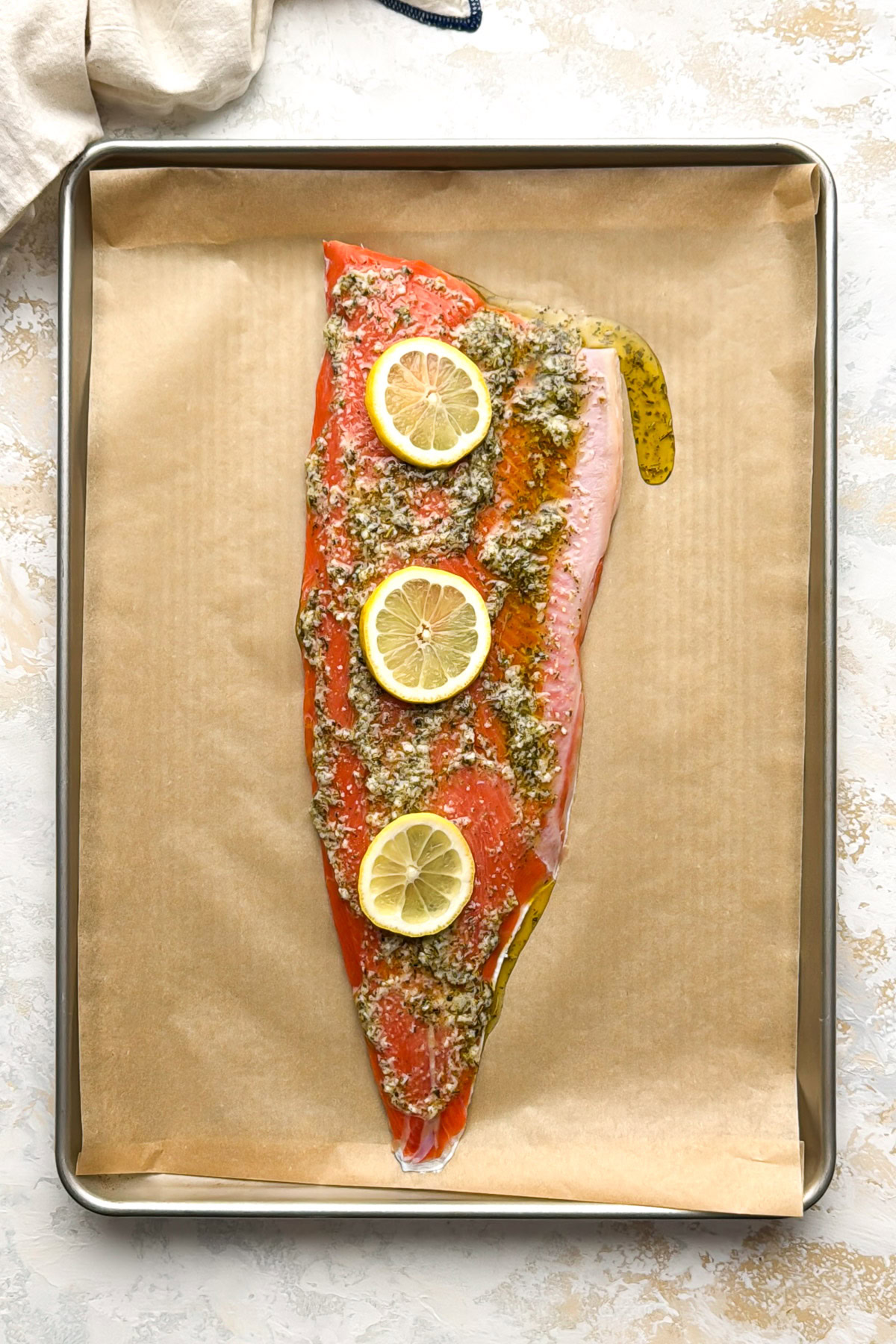
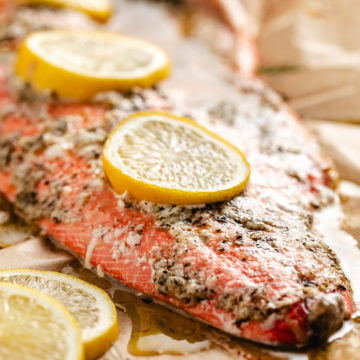
- Spread the mixture evenly over the top of the salmon, covering it from edge to edge. Lay the lemon slices across the top of the fish.½ large lemon
- Place the pan into the center rack of the oven, and bake. Start checking at 12 minutes for thin fillets (1 inch) and at 18 minutes for thick fillets (1.5 inches).
- Check with a meat thermometer in the thickest part of the fish. Remove the salmon from the oven the moment it hits 130°F.
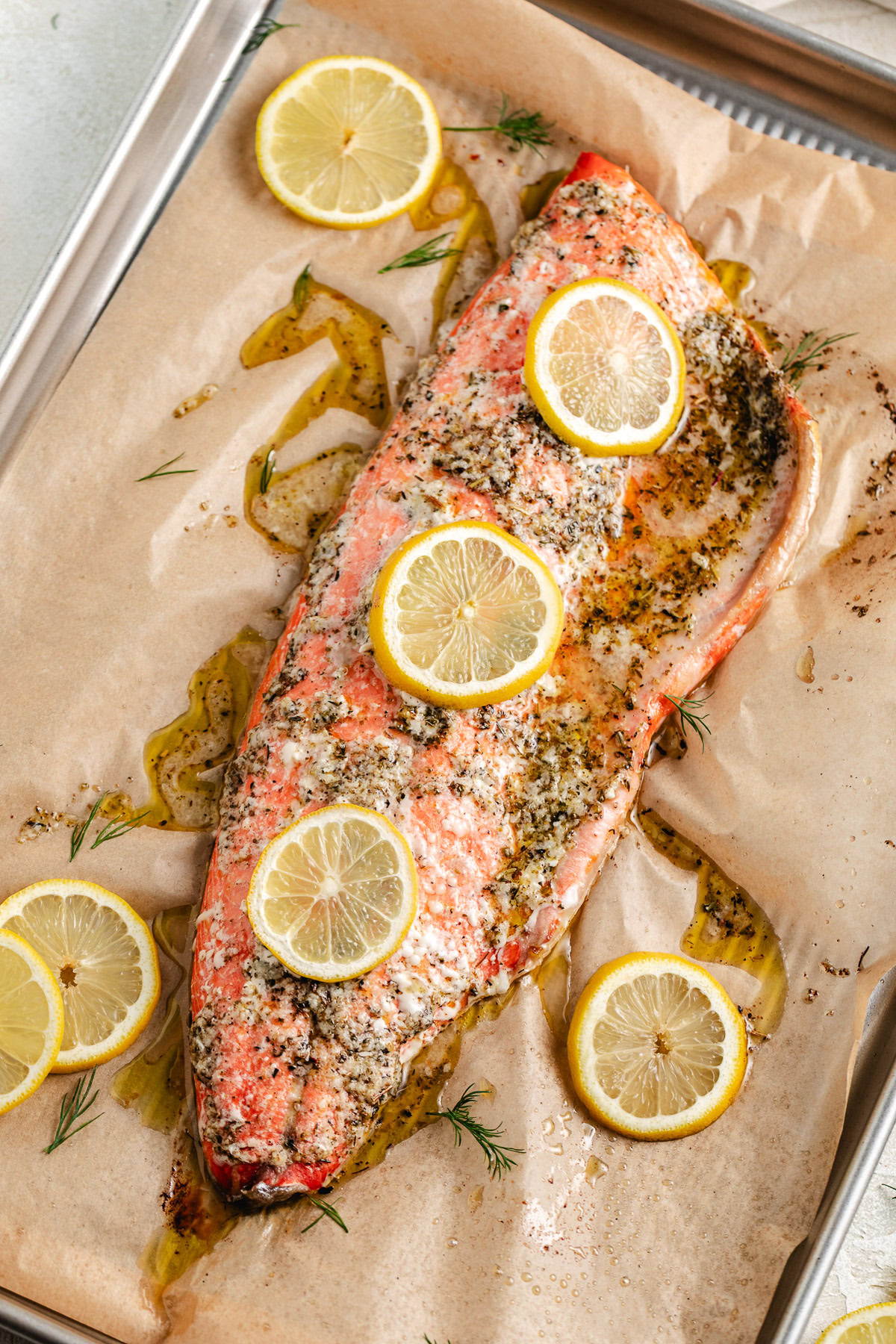
- Let the salmon rest on the pan for 5 minutes. The temperature will naturally rise to 135°F. Garnish with fresh herbs and serve immediately.1 tablespoon fresh parsley or dill
I tried to belly-flop it but got Turkish Delight all over it.
Oh no, well hopefully you still enjoyed the salmon. Thank you for commenting. Have a wonderful day, Kenna!